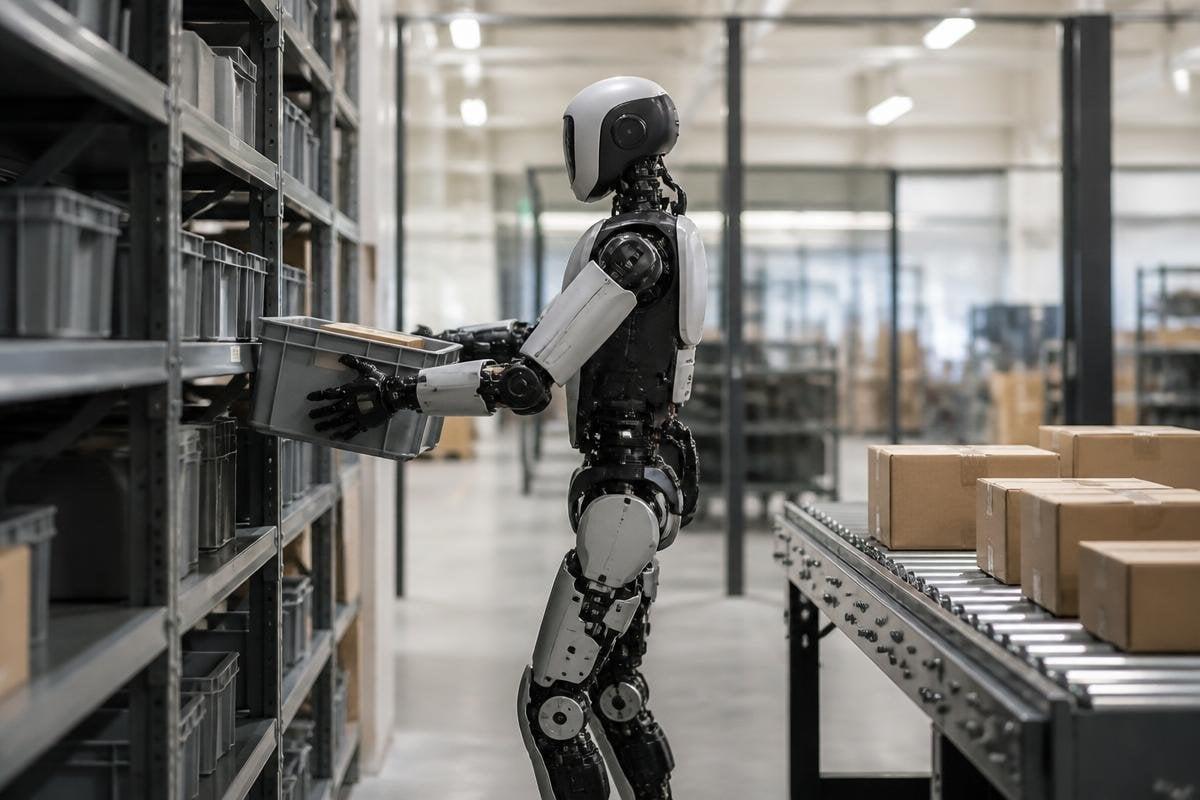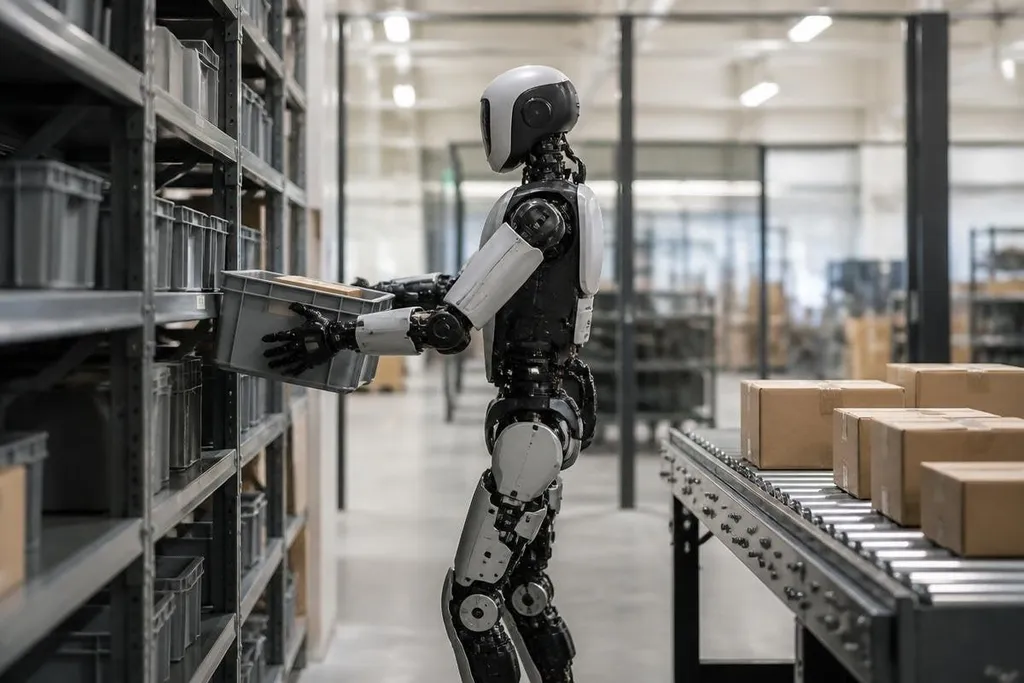
The next wave of humanoid robots will be judged by the jobs they finish, not by how closely they resemble people. For an operations manager, the useful question is simple: what can the robot do for a full task, under normal safety rules, with a clear cost?
- Ask for a full task video, not a short movement clip.
- Check who controls the robot when its sensors lose track.
- Treat price, service, training, and downtime as part of the robot.
Start with the task
A human-shaped robot can reach shelves, use tools, and move through spaces built for people. That shape may reduce changes to a site, but it doesn't prove that the robot can work there. Reach, balance, grip force, battery life, and recovery after a mistake all matter at once.
Write the task down before comparing machines. “Move parts” is too broad. A useful task description names the object, its weight, the starting point, the drop point, the required speed, and the result that counts as success.
This also gives you a fair test. If the robot must lift 8 kg, place the same 8 kg load in every trial. If the work runs for an 8-hour shift, ask how many battery changes and operator checks fit inside that period.
Those are test conditions, not promises about any one robot.
Watch the handoff, not the pose
A short clip can show a robot walking, turning, or picking up an object. The harder part starts when the object is damaged, misplaced, slippery, or partly hidden. Ask what the robot does after the first plan fails.
Control matters here. Some systems can run a task on their own after setup. Others rely on teleoperation, where a person guides the robot from a distance. Teleoperation may help during early trials, but the labor cost belongs in the calculation.
The same rule applies to safety. Ask where the emergency stop sits, how the robot reacts to a person entering its path, and what happens after a sensor fault. A safe trial needs a written stop procedure, trained staff, and a clear way to restart the system.
A humanoid's walking clip says little about whether it can work a shift. Reports at Robot 24 can put the task, runtime, operator role, and failure limits beside the claim. The next section tests whether newer models can repeat useful work without a person guiding each move.
What newer humanoid models must prove
The label “newer model” says little on its own. A newer model should show a clear change in work results, such as a longer run between charges, fewer remote interventions, a heavier tested load, or a shorter setup period.
Ask for the test conditions beside every number. A walking speed measured on a clean floor tells you less than the same measure on the surface where the robot will work. A lifting figure also needs the arm position, object shape, repetition rate, and safety limit.
Service data matters as much as motion. Find out who replaces worn parts, how long a repair takes, what software support costs, and whether the maker gives you logs from failed tasks. If those answers are missing, the business case is still incomplete.
The strongest opposing view is that a human shape may let one robot handle many tasks over time. That may prove useful, but a broad task list can also hide weak results on the one job you need today.
A buying check before a pilot
Use this list before a demo becomes a purchase request:
- Name the task: record the load, route, handoff, work rate, and pass condition.
- Request raw evidence: ask for an uncut run under conditions close to your site.
- Count human input: record every remote correction, reset, inspection, and battery change.
- Price the full service: include training, software, spare parts, repairs, and floor changes.
- Set a stop rule: decide which failure rate or safety event ends the trial.
The list turns a showroom visit into a work test. It also gives your team a way to compare a humanoid robot with a fixed arm, mobile robot, or a person doing the same task.
The useful next step
I'd wait for task records before paying for a humanoid pilot. Ask the maker for one repeatable job, its full operating cost, and the failure log; until those numbers exist, the human shape is still a design choice rather than proof of useful work.